



Frequently
Asked Questions
Once interlocking split flanges are installed, you have earned your peace of mind.
FAQs
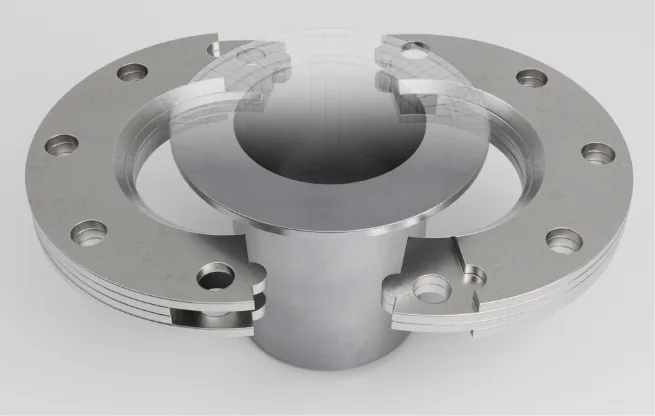
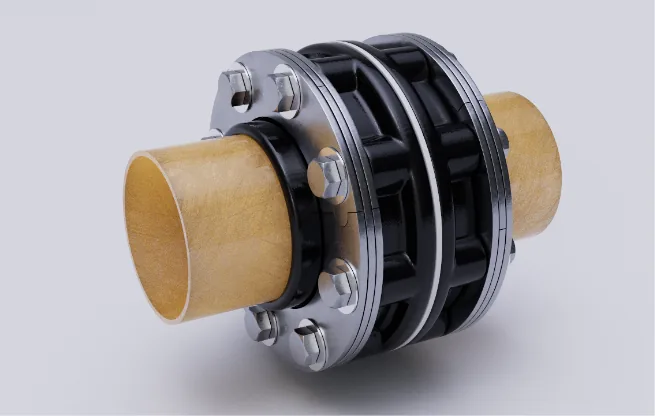
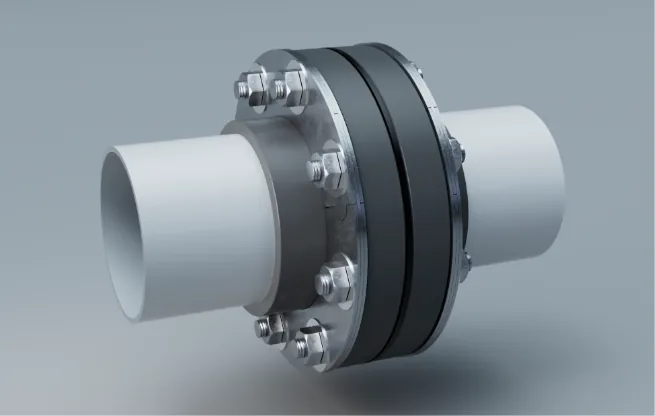
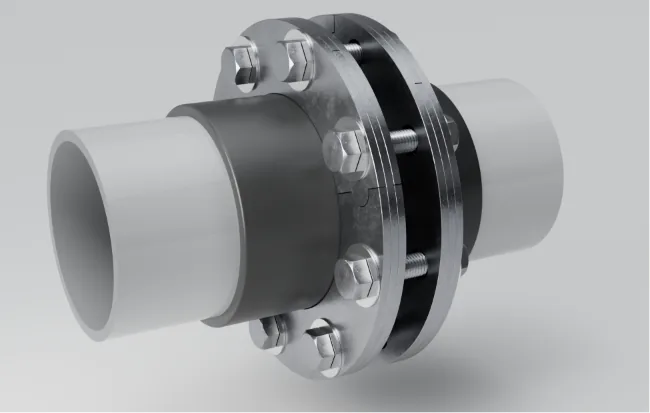
The most frequently asked questions regarding flanges and flange fittings have to do with how flanges fit on specific steel tube and steel pipe ends.
Flanges work for angle face rings, stub ends, and other specific flange fitting requirements, in addition to how the actual flange connection is made for each tube flange and pipe flange repair application.
Didn't find what you were looking for?
Check out the products page again to see if you can find the right class, material, and purpose.
Flange ProductsHave Questions? Need A Quote? Contact Us.
Have any questions about us, our product technical specs, or any other aspect of our operations? Contact us today.
Contact UsFAQs
- Angle Face Ring
Pipe or tube fits inside to form male/female type fit.
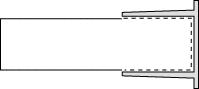
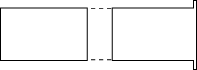
- Stub End
Mates up flush with pipe or tube.
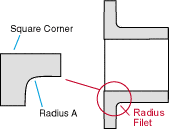
- Type A Stub End: Radius Fillet
Most widely used stub end. Designed to be used with lap joint flanges.
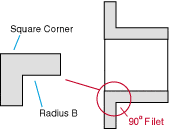
- Type B Stub End: Lap Joint
Designed to be used with slip-on flanges.
- Type C Stub End
An economy stub end for use where square inside corner and heat treatment after forming are not required. For use with back up flanges.
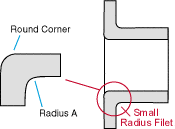
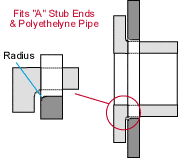
- Radius
Proper sized radius on inside diameter of backing ring to accommodate radius on fillet of type "A" stub ends and polyethylene pipe.
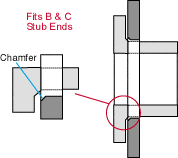
- Chamfer
45° angled radius on inside diameter of flange to assume a flush fit on type "B" and "C" stub ends or angle face rings.
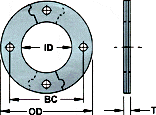
- Measurements
- ID: Inside Diameter
- BC: Bolt Circle
- OD: Outside Diameter
- T: Thickness
Backing and Replacement Rings
- What is the difference between a PVC/CPVC reinforcement ring and a replacement ring?
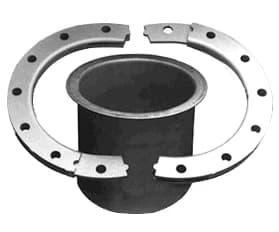
A reinforcement ring installs behind a PVC or CPVC Van Stone backing ring to reinforce it and keep it from cracking. A replacement ring takes the place of a cracked PVC/CPVC or PVDF Van Stone flange, so you do not have to cut out and replace the whole connection. Both are Marzolf two-piece rings.
- What is the difference between a fiberglass backing ring and a stand-alone ring?
A backing ring fits behind a molded fiberglass flange to reinforce it and prevent cracking. A stand-alone ring installs after hand lay-up or contact molding to simplify fabrication. In the catalog, they are listed as Reinforcement Backing Ring and Standalone / Replacement Ring.
Still Have Questions? Let's Talk About Your Project.
Contact our team. We're ready to answer your questions, review your requirements, and help you find the right solution.